Single Screw vs Twin Screw Extruder: How to Choose
Choosing between a single screw extruder and a twin screw extruder is the most fundamental engineering decision in any plastics extrusion project. This article provides the definitive comparison and a simple decision framework.
The Basic Principle
A single screw extruder uses one rotating screw to convey, melt, and pressurise polymer by friction and heat — mechanically simple, energy-efficient, and the most widely used type globally.
A twin screw extruder uses two intermeshing screws providing positive conveying, intensive mixing, and self-wiping action. More complex, but delivers capabilities a single screw cannot match for PVC and filled compounds.
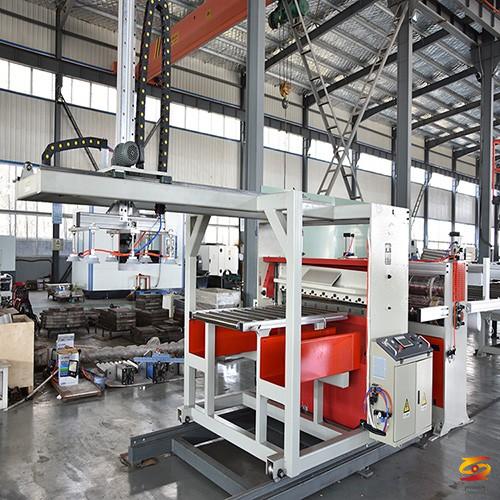
Conical twin screw extruder from Qingdao Precision's SPC flooring line.
Full Technical Comparison
| Parameter | Single Screw | Twin Screw (Conical) | Twin Screw (Parallel) |
|---|---|---|---|
| Conveying | Drag flow (friction) | Positive displacement | Positive displacement |
| Mixing intensity | Low–moderate | High | Very high |
| Best for | PE, PP, PS, PET, ABS | PVC rigid/foam, WPC | Highly filled, compounding |
| L/D ratio | 25:1–33:1 | 18:1–22:1 | 28:1–44:1 |
| Capital cost | Low | Medium | Medium–high |
| Self-cleaning | No | Yes | Yes |
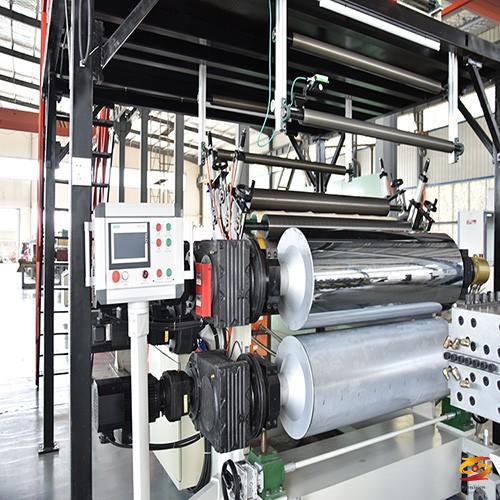
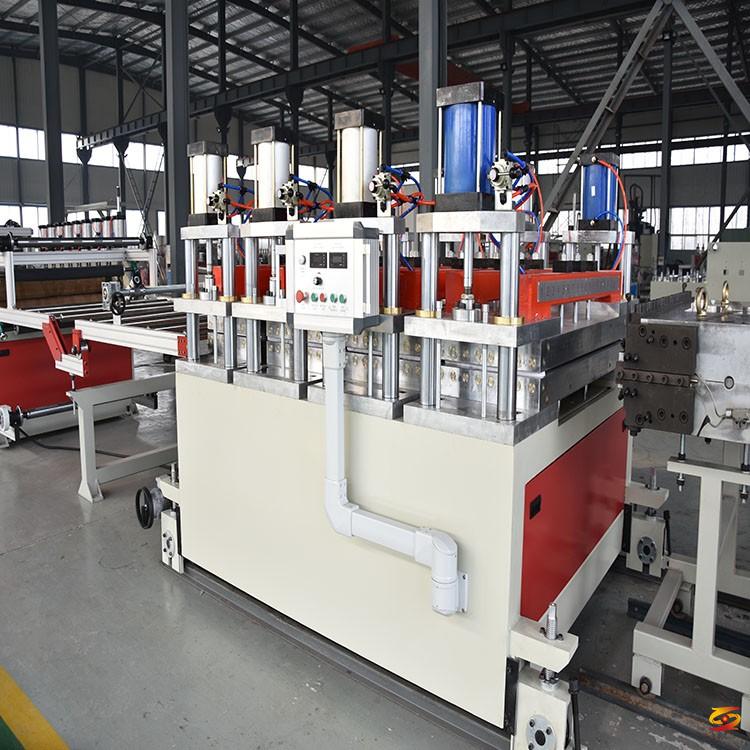
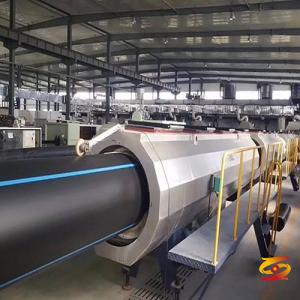
Left: Twin screw extruder feeding a calender stack. Right: Die head on a conical twin screw foam board line.
The Decision Framework
Choose Single Screw When...
- Processing PE, PP, PS, PET, ABS, EVA
- Product is pipe, film, or monofilament
- Material is unfilled/lightly filled
- Maximum energy efficiency is priority
Choose Twin Screw When...
- Processing rigid PVC, PVC foam, WPC
- Material is highly filled (>30%)
- Product requires intensive mixing
- Running SPC, profile, or PVC pipe
The Golden Rule: For PVC — always twin screw. PVC is thermally sensitive and needs gentle, intensive mixing. For PE, PP, PET without heavy fillers — single screw is almost always right and costs less.
Screw & Barrel Metallurgy
| Material/Treatment | Hardness | Best For |
|---|---|---|
| Nitrided steel (38CrMoAlA) | 900–950 HV | Standard PVC, PE, PP — best cost/performance |
| Bimetallic barrel (WC) | 60–65 HRC | Heavily filled WPC, abrasive compounds |
| Nickel alloy bimetallic | 58–62 HRC | Corrosive materials, fluoropolymers |
Complete Extruder Range
Full Plastic Extruder Range — Single & Twin Screw Conical twin (SJSZ), parallel twin (SHJ), and single screw (SJ) extruders — Ø35 to Ø200 mm. View Product →Frequently Asked Questions
Q: Can a single screw extruder process PVC? Not recommended for rigid PVC. Poor mixing leads to degradation, black spots, and excessive wear. All commercial PVC pipe/profile/foam board production uses twin screw extruders.
Q: What does L/D ratio mean? Ratio of screw length to diameter. Higher L/D provides more melting/mixing time. PE pipe: L/D 30:1–33:1. WPC compounding: L/D 36:1–44:1.
Q: Conical vs parallel twin screw? Conical tapers from large feed to small output — ideal for PVC/WPC foam board. Parallel maintains constant diameter, allowing higher L/D — preferred for compounding.
Q: How do I get a price? Send requirements via the contact form or email sales@plastmachine.cn — material, screw diameter, output needed. Quote within 24 hours.
Not Sure Which Extruder You Need? Tell us your material, product, and output target — we'll recommend the right extruder with factory-direct pricing. Get Extruder Recommendation →