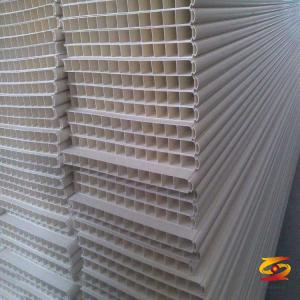
Plastic Extrusion Equipment: The Complete Industry Guide 2026
Industry Knowledge · 2025 Edition
Plastic Extrusion Equipment:
The Complete Industry Guide
Technologies, machine types, applications, and expert selection criteria for modern plastic extrusion production lines
Table of Contents
- What Is Plastic Extrusion?
- How a Plastic Extruder Works
- Single Screw vs. Twin Screw Extruders
- Board, Sheet & Film Production Lines
- Profile & Pipe Extrusion Lines
- Specialty & Composite Lines
- Materials & Processing Parameters
- How to Select the Right Machine
- Quality & Technical Standards
- Frequently Asked Questions
1. What Is Plastic Extrusion?
Plastic extrusion is a continuous, high-volume manufacturing process in which raw thermoplastic material — pellets, granules, or powder — is melted inside a heated barrel and forced through a precision die to produce a product of uniform cross-section. The output may be a flat sheet, rigid board, flexible film, hollow pipe, complex profile, or solid rod, determined entirely by die geometry and downstream tooling.
Industrialized in the early 20th century, extrusion today underpins a vast share of global plastic output. Construction boards, packaging films, automotive trims, irrigation pipes, luxury flooring panels, thermal insulation boards, and medical tubing are all manufactured via extrusion. The technology is prized for consistent dimensional tolerances, high throughput rates, and low per-unit costs at scale.
Market Context: The global plastic extrusion machinery market is projected to surpass USD 8 billion by 2027, driven by construction sector expansion in Asia-Pacific, the explosive growth of SPC rigid-core flooring, rising demand for WPC (Wood-Plastic Composite) green building materials, and increased recycled-polymer processing capacity.
Qingdao Precision Machine Co., Ltd. is a China-based turnkey extrusion line manufacturer supplying customers in over 80 countries. Its product catalog spans the full spectrum of plastic extrusion applications — from single-screw PE pipe lines to high-complexity multi-layer SPC calender lines — all engineered to international quality standards.
2. How a Plastic Extruder Works
All plastic extruder machines share the same fundamental working principle: thermal energy and mechanical shear are applied to a solid polymer to produce a homogeneous melt, which is then shaped by a die and solidified downstream. The five core stages are:
1
Feeding
Raw material is loaded into a hopper and fed by gravity or force-feeder into the barrel-screw assembly. Additives, colorants, fillers, and foaming agents may be introduced at the hopper or co-fed downstream via side-stuffers.
2
Melting & Conveying
The rotating screw generates frictional shear while resistance heaters maintain precise barrel temperature zones. Material progresses through three screw zones — feed, compression, and metering — emerging as a fully plasticized, pressurized melt.
3
Filtration & Pressurization
A screen pack and breaker plate filter contaminants and homogenize melt flow before the die. Melt pressure sensors provide real-time feedback to the control system for process stability.
4
Die Shaping
The die defines the product's cross-sectional profile. Flat-sheet dies, annular pipe dies, multi-cavity profile dies, and co-extrusion foam dies each impose distinct flow geometries on the molten polymer stream.
5
Cooling, Sizing & Take-off
Downstream equipment — water-cooling tanks, vacuum sizing units, haul-off caterpillars, cutters, and winders — solidifies, calibrates, and packages the extrudate at line speed. PLC systems coordinate all units in real time.
Modern plastic extrusion production lines use Siemens or Mitsubishi PLC systems with touchscreen HMIs, enabling operators to monitor melt pressure, barrel temperatures, screw torque, and haul-off speed from a single station. Data logging and remote diagnostics are increasingly standard on export-grade equipment.
3. Single Screw vs. Twin Screw Extruders
The choice of extruder type is the most fundamental engineering decision in any extrusion project. Qingdao Precision Machine's extruder range covers both single-screw and twin-screw (conical and parallel) configurations — each suited to specific polymers and product types.
| Parameter | Single Screw Extruder | Twin Screw Extruder |
|---|---|---|
| Screw Configuration | One rotating screw; simple, robust | Two intermeshing screws; co-rotating or counter-rotating |
| Best Materials | PE, PP, PS, PET, ABS — unfilled or lightly filled | PVC compounds, WPC, glass-filled, mineral-loaded polymers |
| Mixing Capability | Moderate — adequate for clean thermoplastics | High — essential for multi-component blends and fillers |
| Typical L/D Ratio | 25:1 – 33:1 | Conical 18:1–22:1 · Parallel 28:1–40:1 |
| Energy Efficiency | Very high — low mechanical complexity | Slightly lower; justified by compound output quality |
| Capital Cost | Lower | Higher; offset by superior quality for demanding applications |
| Typical Products | PE pipe, PP sheet, PET film, EPE foam, geomembrane | PVC foam board, WPC profile, SPC flooring, PVC pipe |
Conical vs. Parallel Twin Screws
Conical twin screw extruders taper from a large feed-end diameter to a smaller output diameter, providing high plasticizing capacity while limiting shear heat at the die — ideal for rigid PVC and WPC crust foam board lines. Parallel twin screw extruders maintain constant diameter along their full length, enabling higher L/D ratios and more intensive compounding — preferred for heavily filled formulations, reactive processing, and devolatilization applications.
All extruders in Qingdao Precision's range feature bimetallic barrel liners and nitrided screw surfaces (surface hardness ≥ 900 HV) for extended service life with abrasive PVC and calcium carbonate-loaded WPC compounds.
4. Board, Sheet & Film Production Lines
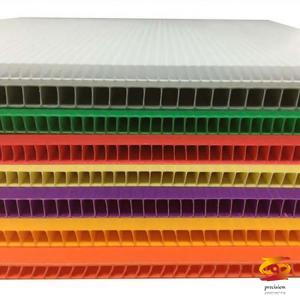
This is the broadest category of plastic extrusion equipment, producing flat products across a wide range of thicknesses, widths, and material formulations. The six most commercially significant lines are highlighted below.